When “Saving Face” Hurts Your Relationship: Navigating Cultural Differences and Mental Health with Your Partner
You love your partner, but sometimes it feels like you are speaking two different emotional languages. One of you wants to talk it out, name the feeling, and be validated. The other pulls back, keeps the peace, and protects the family’s image, because that is what love and maturity always looked like growing up. Neither of you is wrong. But the friction is real, and it can quietly erode even a strong relationship.
For many Asian American couples, and cross-cultural couples where one partner is more acculturated than the other, these clashes are not about incompatibility or a lack of love. They are the predictable, and workable, product of two cultural scripts meeting: one that prizes emotional restraint and saving face, and one that prizes open expression and validation.
This guide unpacks why these differences run so deep, how generational trauma and the acculturation gap show up in a marriage, and how culturally fluent care can help partners understand each other instead of just clashing.
The Root of the Conflict: Two Different Emotional Operating Systems
Many couple conflicts labeled as poor communication are actually a collision of two culturally shaped ways of handling emotion.
East Asian cultural traditions, shaped by Confucian values, tend to center the self as interconnected with others, prioritizing interpersonal harmony, relational obligations, and group cohesion over individual self-expression. In this framework, emotions are often regulated to minimize social burden, through restraint of expression or internal strategies like acceptance, rather than voiced for personal relief. Western individualistic scripts, by contrast, tend to treat open emotional expression, autonomy, and asserting the authentic self as healthy and desirable.
Crucially, neither script is objectively healthier. Research shows that for East Asians, emotional suppression can carry unique benefits and is not always linked to worse outcomes the way it often is in Western samples, while at times open emotional expression has been associated with more depressive and somatic symptoms in East Asian individuals. The problem in a relationship is not that one partner is doing it wrong. It is that two valid systems are running at once, without a shared translation.
“Saving Face” and the Validation Gap
The concept of saving face is one of the most common, and most misunderstood, sources of friction in these relationships.
In many Asian cultural contexts, relationships are characterized by loyalty, obligation, and a strong need to save face, especially regarding one’s family. A desire to avoid drawing attention to personal weakness or to preserve relational harmony can lead a partner to minimize distress, avoid conflict, or resist airing problems. To a more acculturated partner who equates intimacy with open disclosure and validation, this can feel like emotional distance, secrecy, or dismissiveness.
The same cultural forces powerfully shape help-seeking. Beliefs that psychological problems reflect personal failure, and the wish to save face by not exposing that failure, are associated with reluctance to seek professional help among Asian Americans, who often delay care until symptoms are severe. Within a couple, this can create a painful stalemate: one partner wants to get help for the relationship, while the other experiences that very suggestion as shameful or threatening to the family’s image.
The Acculturation Gap: When Partners Adapt at Different Speeds
When two partners are acculturated to different degrees, the gap itself can become a source of stress, though the picture is more nuanced than it may seem.
Research on immigrant and cross-cultural couples shows that within-couple acculturation gaps can negatively affect personal well-being, even when they do not necessarily damage relationship quality outright. In Chinese American couples followed over eight years, lower language acculturation was linked to greater stress about being stereotyped as a perpetual foreigner, and that stress was in turn associated with more depressive symptoms, which predicted greater marital hostility in the partner. This illustrates how one partner’s acculturative stress can spill directly into the couple’s dynamic.
Importantly, the newest research pushes back on the idea that acculturation gaps are uniformly harmful. Person-centered studies find that spousal acculturation gaps are common, and that not all gaps are damaging. In some cases they may even support resilience. The takeaway for couples: a difference in acculturation is not a verdict on your relationship. It is a factor to understand and work with.
The Invisible Third Party: Intergenerational Trauma
Sometimes the tension in a relationship did not start with either partner. It was inherited.
Intergenerational trauma refers to emotional and psychological wounding transmitted across generations, through interacting biological and caregiving processes. Offspring of trauma-exposed parents show increased vulnerability to anxiety, depressive symptoms, and stress-related conditions, often alongside shifts in caregiving patterns and emotional environments. For families shaped by migration, war, displacement, or the chronic stress of adapting to a new country, these legacies can echo into how a person handles conflict, closeness, and vulnerability with a partner.
Naming this invisible third party can be freeing for couples. Patterns that feel intensely personal, such as why do you shut down whenever we argue, often make sense as learned survival strategies rather than deliberate rejection.
How Culturally Fluent Care Helps Couples
The good news is that these dynamics respond well to care that actually understands the cultural context, not generic advice to just communicate more.
The evidence strongly favors culturally attuned care. Meta-analytic findings show that people from racial and ethnic minority groups tend to have better outcomes with culturally adapted interventions than with unadapted ones, and adaptations tailored to a specific cultural group outperform those delivered generically. Effective adaptations include delivering care in a partner’s preferred language and incorporating culturally relevant understandings of distress.
For couples specifically, approaches designed with these dynamics in mind are emerging:
- Socio-Emotional Relationship Therapy (SERT) has been applied to Asian-heritage couples using sociocultural attunement, working with themes like intangible loss, the value of not burdening others, and duty to family, while helping partners build mutual vulnerability and shared responsibility rather than pathologizing cultural values.
- Relational savoring is a brief, strengths-based intervention that aligns with cultural values like interconnectedness and family ties, and is being adapted for Asian American, Native Hawaiian, and Pacific Islander families to leverage those bonds as an asset.
- Culturally adapted evidence-based practices, such as CBT modified to integrate cultural values and directly address stigma, are widely used by therapists serving Asian American and immigrant communities, with relationship-building and trust cited as essential.
The goal of this work is not to decide whose culture wins. It is to help both partners understand each other’s emotional operating system, so that saving face and seeking validation stop being adversaries and start being two needs a couple can honor together.
If cultural differences, family expectations, or inherited patterns are straining your relationship, you are not broken and your relationship is not doomed. You are navigating something real, and you do not have to navigate it alone. With culturally fluent care, the very differences that feel like walls can become a deeper understanding of each other.
Ready to understand each other again?
Alice Tran, PMHNP-BC, provides psychiatric evaluations, medication management, and supportive therapy, in person in Fairfax and via telehealth across Virginia, in English and Vietnamese. No referral needed.
Schedule a ConsultationSee Also
Sources
- Qiu LS, Lai M, Koike A, et al. Exploring Cultural Influences in the Associations Between Emotion Regulation and Mental Health. Clinical Psychology & Psychotherapy. 2026;33(2):e70276. View
- Wong YJ, Tran KK, Kim SH, Van Horn Kerne V, Calfa NA. Asian Americans’ lay beliefs about depression and professional help seeking. Journal of Clinical Psychology. 2010;66(3):317-32. View
- Nguyen N, Kim B, Aronowitz T. Factors that influence Asian American college students’ use of mental health services. Journal of Psychiatric and Mental Health Nursing. 2024;31(2):181-202. View
- Sun Q, Geeraert N, Lamarche VM. Home Is Where the Heart Is: Implications of Dyadic Acculturation for Migrant Couples’ Personal and Relational Well-Being. Personality & Social Psychology Bulletin. 2024;50(4):550-570. View
- Hou Y, Neff LA, Kim SY. Language Acculturation, Acculturation-Related Stress, and Marital Quality in Chinese American Couples. Journal of Marriage and the Family. 2018;80(2):555-568. View
- Li J, Costigan CL, Lou NM. A Profile Analysis of Triadic Acculturation Gaps in Chinese Canadian Immigrant Families. Journal of Family Psychology. 2026. View
- Kac E, Qi Q, Ryznar R. Epigenetic Changes Associated With Multi-Generational Trauma. Frontiers in Psychiatry. 2026;17:1769422. View
- Cerdeña JP, Rivera LM, Spak JM. Intergenerational Trauma in Latinxs: A Scoping Review. Social Science & Medicine. 2021;270:113662. View
- American Psychiatric Association. Social Determinants of Mental Health in Children and Youth. 2022. View
- Estrada M, Haanstad TJ, Reyes N, et al. Intertwined Adversities: A Mixed Methods Study of ACEs and Migration Trauma Among Latinx Immigrants. Journal of Behavioral Medicine. 2026. View
- Hamdi NR, Cutler MJ, Hollon SD, et al. APA guidelines on evidence-based psychological practice in health care. American Psychological Association. 2021. View
- ChenFeng J, Kim L, Wu Y, Knudson-Martin C. Addressing Culture, Gender, and Power With Asian American Couples: Application of Socio-Emotional Relationship Therapy. Family Process. 2017;56(3):558-573. View
- Li FH, Zhou E, Oh H, Borelli JL. Systemic Intervention Through Relational Savoring: Cultural Considerations for Working With Asian American Families. Journal of Marital and Family Therapy. 2025;51(4):e70080. View
- Fu K, Iwamoto M, Chang E, et al. Adapting Evidence-Based Practices for Asian American and Asian Immigrant Communities. Journal of Behavioral Medicine. 2026;49(4):719-733. View
Medical Disclaimer
The information in this article is for educational purposes only and does not constitute medical advice. Only a licensed professional can accurately diagnose and treat psychiatric conditions.
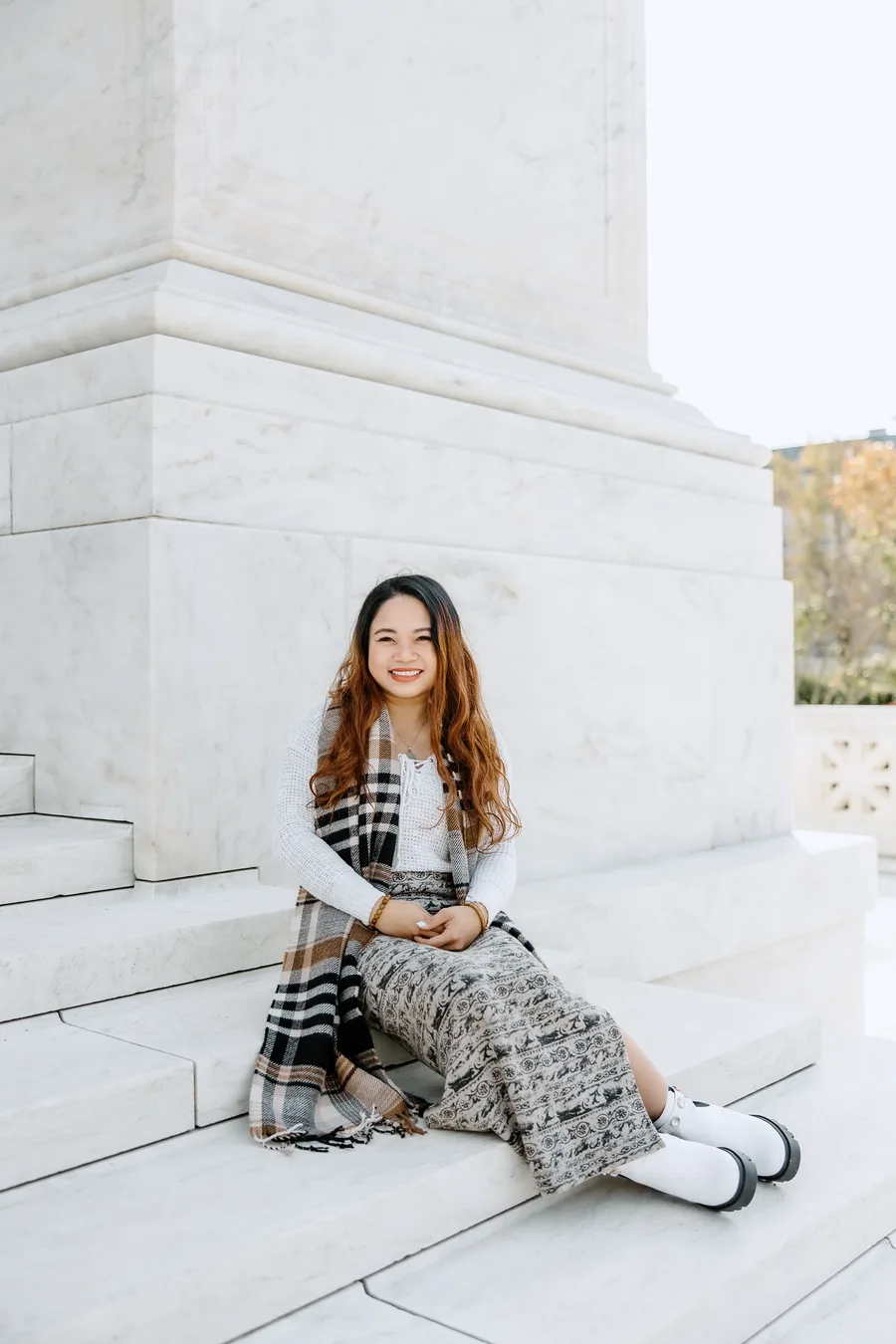
Anh Tran (Alice), PMHNP-BC, FNP-BC
Dual Board-Certified Family and Psychiatric Nurse Practitioner
Alice is a dual board-certified PMHNP and FNP licensed in Virginia, trained under psychiatrist Dr. Errol Segall, MD (50+ years of experience). She treats ADHD, anxiety, depression, and more, in person in Fairfax and via telehealth across Virginia, in English and Vietnamese. She founded Alice Tran Psychiatric Care in Fairfax, where the practice sees adults in person and by video across Virginia. Learn more →